
Earl Grey Madeleines
This post may contain affiliate links. Please read my disclosure policy for details.
These Earl Grey Madeleines feature earl grey-infused sponge cake brushed with earl grey glaze. They are the perfect dessert for tea lovers!
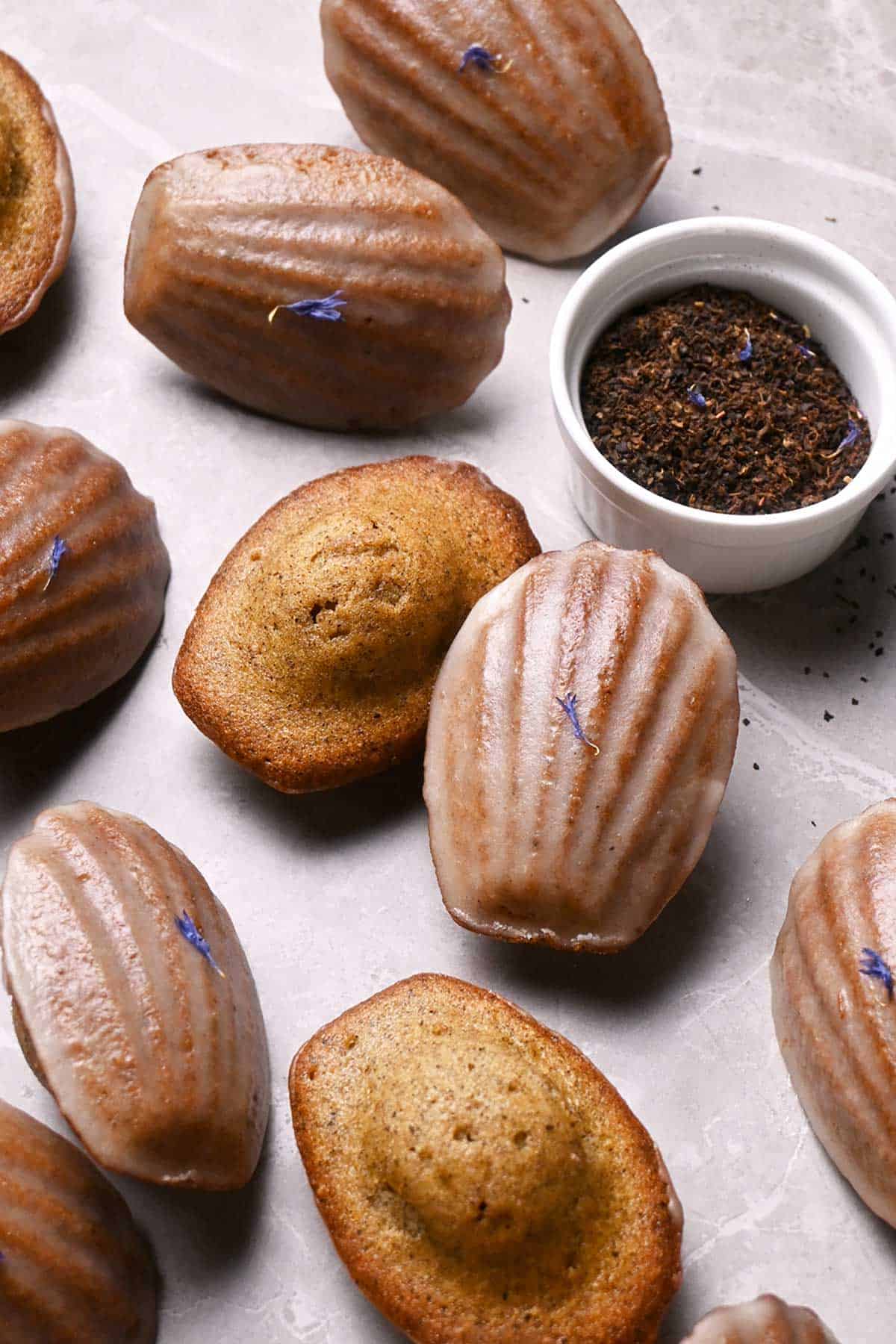
Madeleines are one of my favorite little cakes. My favorite time to eat them is in the afternoon with a cup of tea. So I thought, why not combine madeleines and tea?
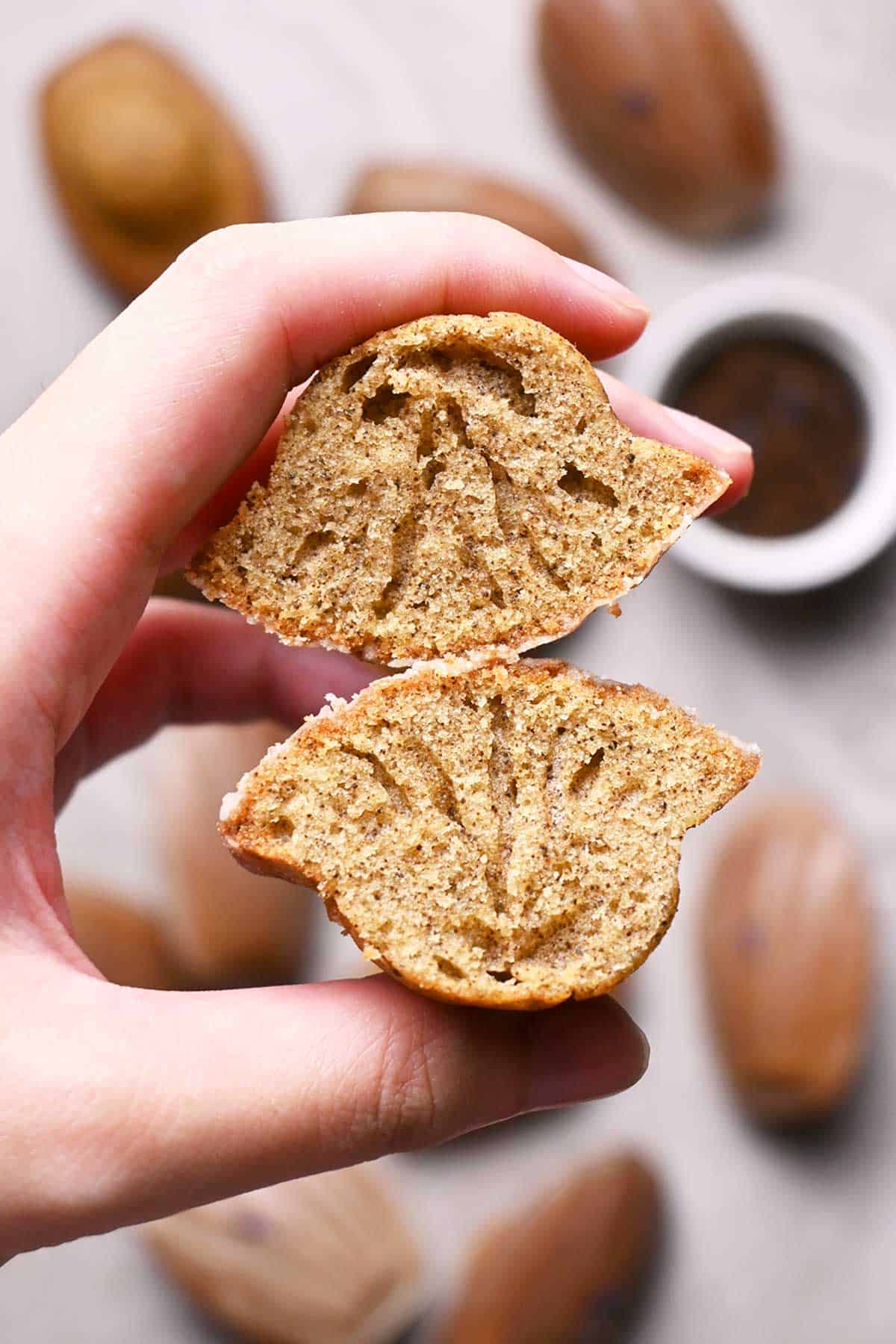
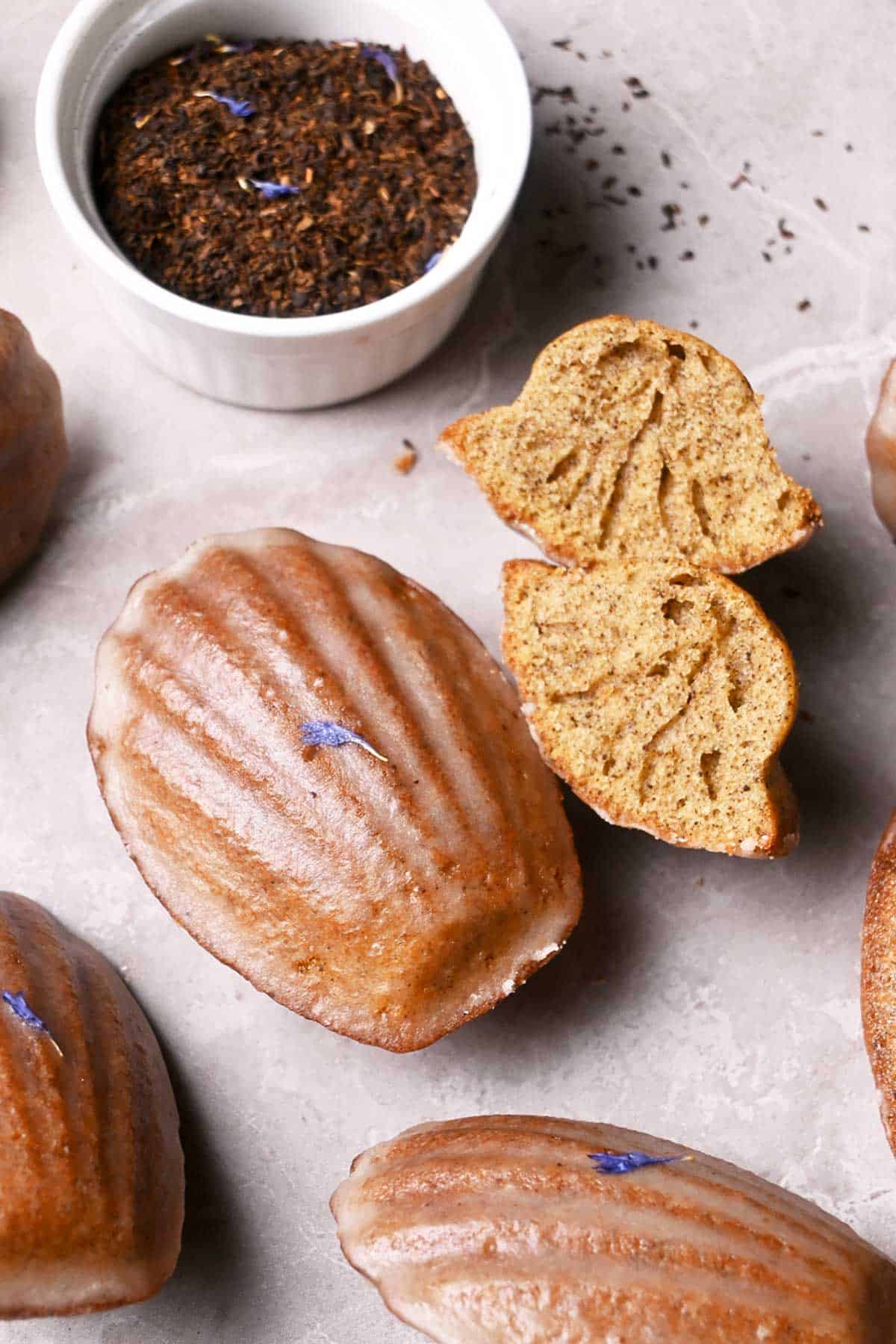
Here we have the Earl Grey Madeleines. The madeleine batter is infused with ground tea leaves for a fragrant, bergamot-scented bite. After they are baked, the madeleines are brushed with earl grey glaze. I have to say that the addition of earl grey is a flavorful twist on tradition. They are a perfect dessert for tea lovers.
Best Tea to Use
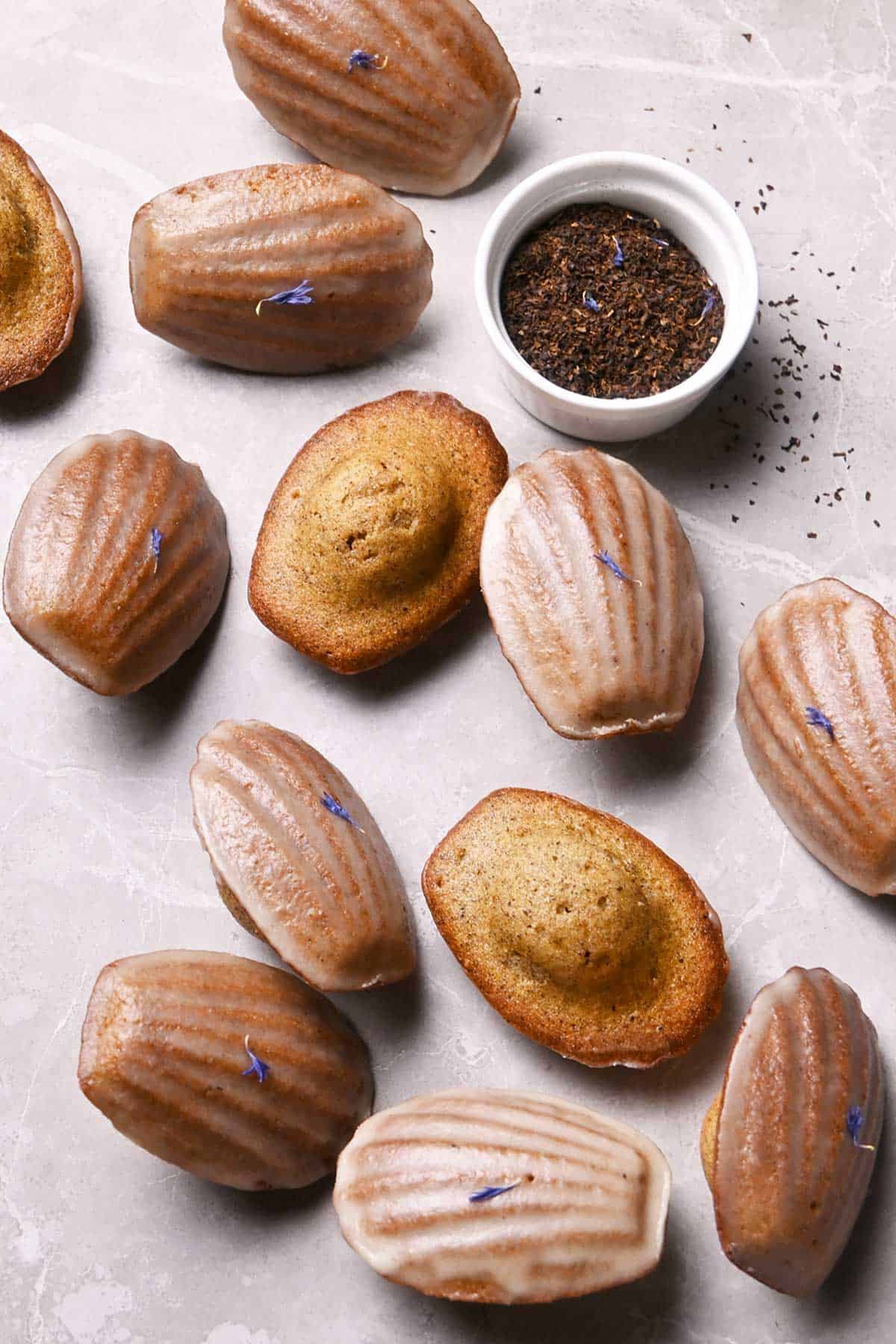
These madeleines are primarily flavoured with earl grey tea. Earl grey is a black tea blend that is flavoured with bergamot orange oil. You can either use loose-leaf earl grey tea or tea bags for this recipe. However, I highly recommend the loose-leaf tea form instead of tea bags.
The differences between loose-leaf tea and tea bags are numerous, and it goes far beyond the surface. The leaves used in most bags are actually the dust and fannings from broken tea leaves. Finely broken tea leaves have lost most of their essential oils and aroma. More importantly, most tea bags constrain the tea leaves, keeping them from expanding to their full flavour and aroma potential. That is why I love using loose-leaf tea for making baked goods, because it is fresher and more flavorful.
For the best texture and even flavour distribution, make sure to grind the loose-leaf tea until finely ground. A spice grinder will do the job. Large tea pieces can feel rough in the dough.
Ingredients You Need
- Unsalted butter. Using high-quality butter in madeleines is simply essential, even more so as the butter is what brings the flavor to them. For the best result, use European-style butter which has less water, higher fat content, and richer flavor. It will really make a difference here.
- Eggs. Make sure you use room-temperature eggs because they blend more evenly in batters.
- Castor sugar. You can also replace it with granulated sugar. I used castor sugar because it blends more easily than granulated sugar.
- Cake flour. Cake flour is ideal for baked goods with a tender texture due to its low gluten content. You can also use all-purpose flour to substitute cake flour.
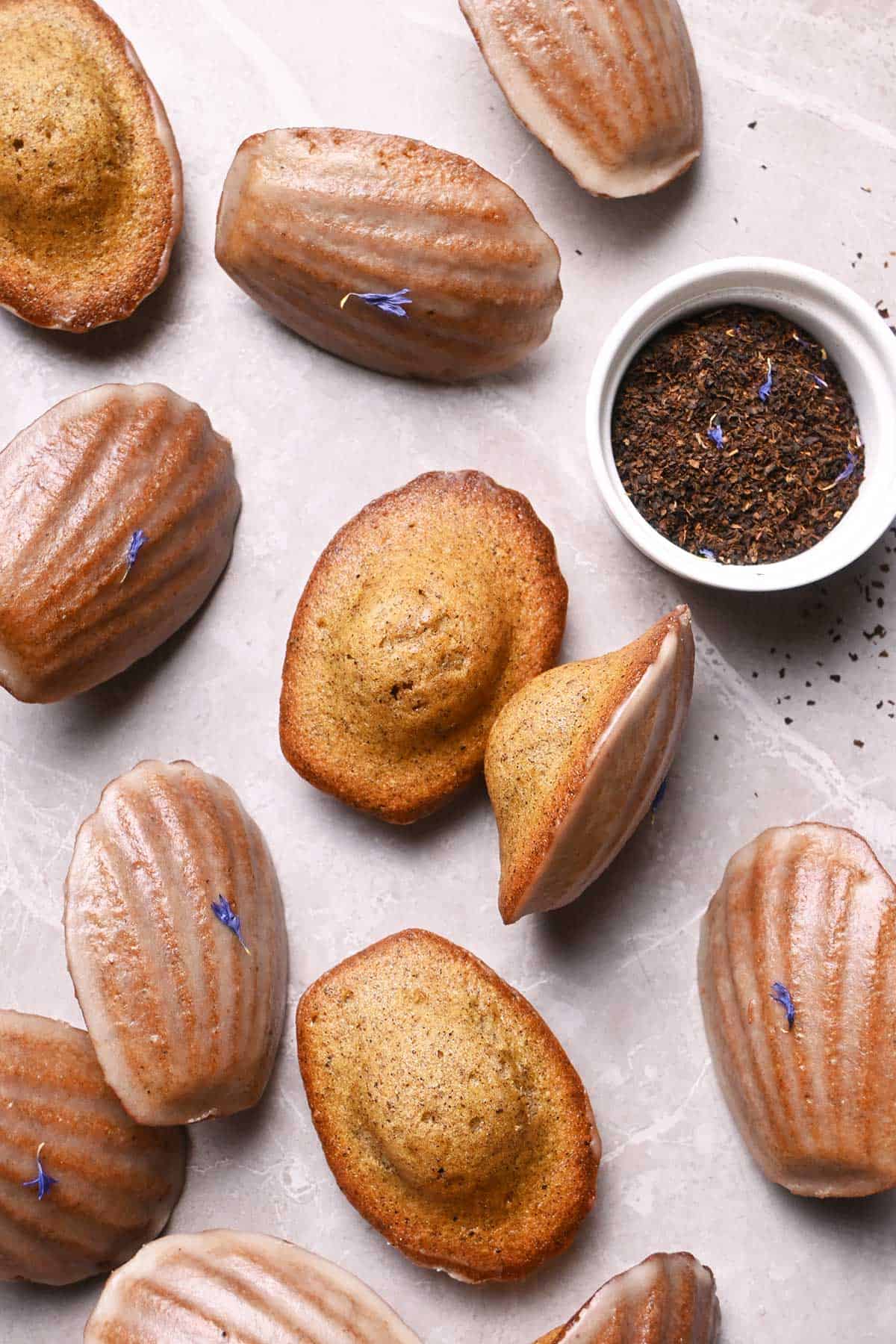
- Earl grey tea. Choose a good-quality earl grey tea that you enjoy drinking. Since it’s the star flavour, its aroma and taste will shine through in every bite.
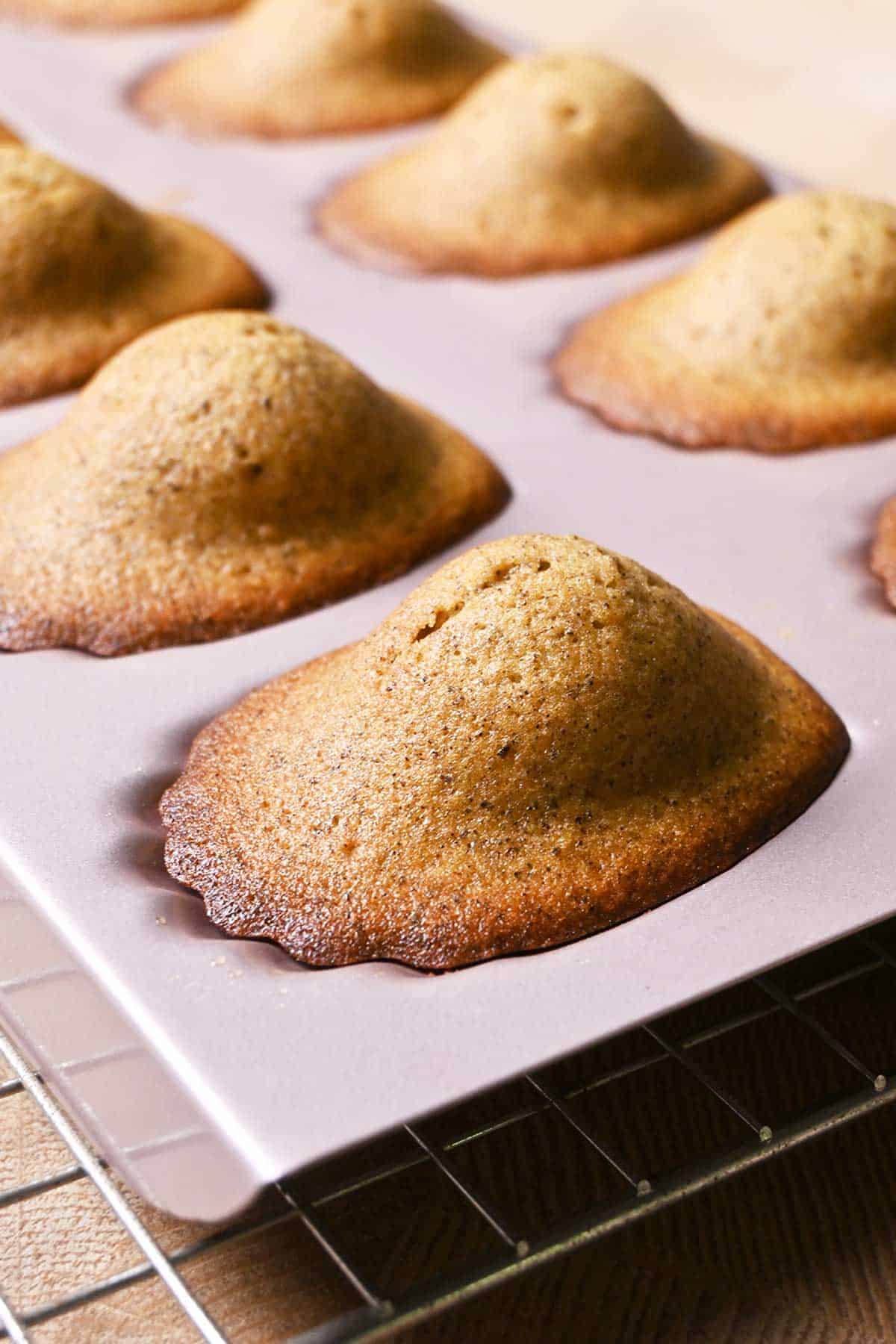
- Baking powder. It is an ingredient responsible for forming the madeleine’s hump.
- Confectioners’ sugar. Mix confectioners’ sugar and earl grey tea to make the glaze.
Choosing Madeleine Pan
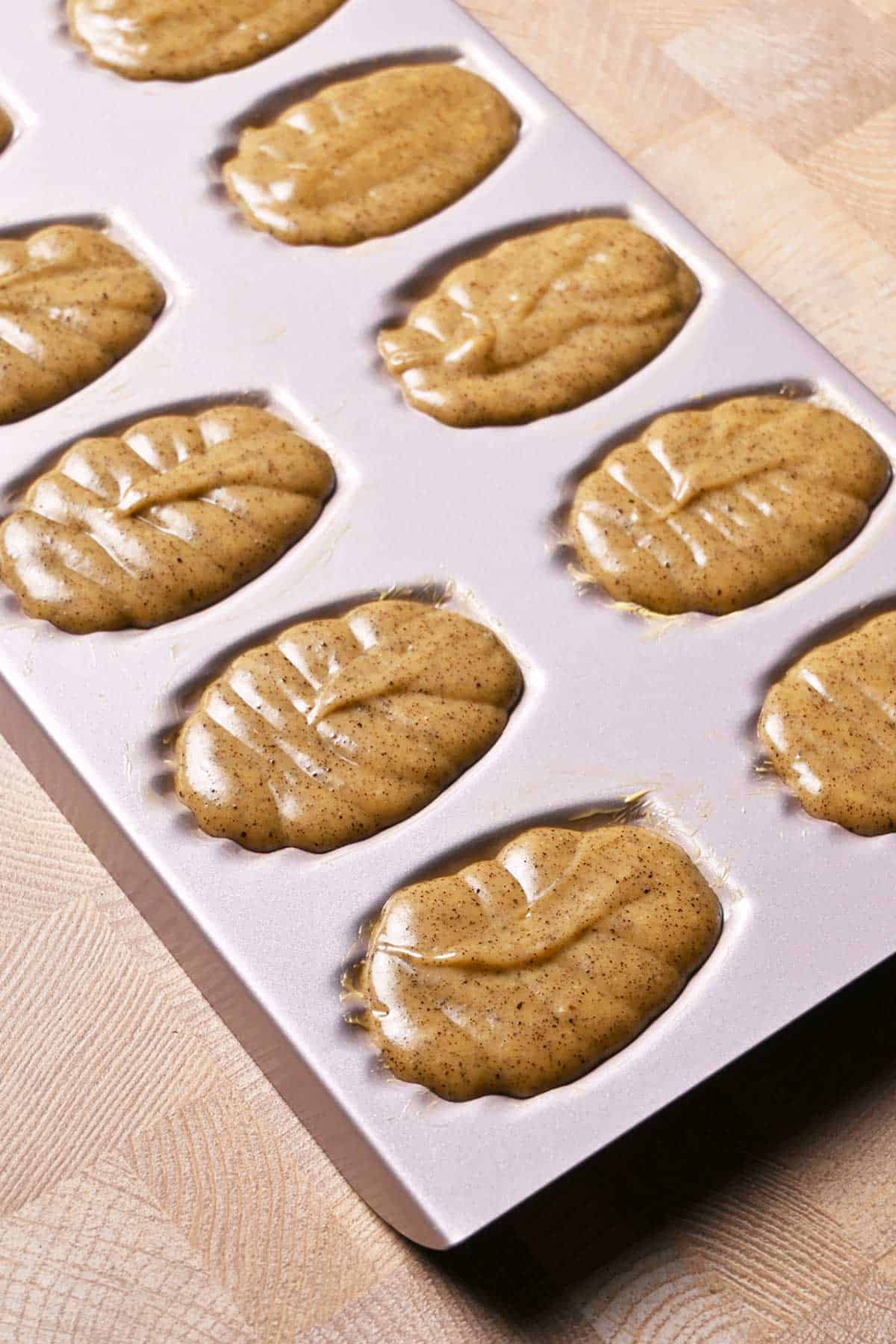
You need one or two madeleine pans to make the signature scallop shape of the madeleines. Consider these things when you buy the madeleine pans:
- Shape. Madeleines are traditionally baked in shell-shaped molds, and the concave, shallow shape directs the batter upwards as the madeleines bake.
- Cavity depth. You want to be sure that the wells are deep enough to produce madeleines with that distinctive hump they are known for.
- Material. You can find different madeleine molds made from metal or silicone. I strongly recommend metal pans. They are great for their excellent heat transfer. In addition, choose a non-stick pan so that the madeleines can be released easily from the pan.
Baking Tips
- Temperature matters. Make sure you use room-temperature eggs and slightly warm melted butter as written in the recipe.
- Rest the dough. The batter must be refrigerated for at least 1 hour or overnight. The purpose of this is to chill the batter which also thickens it. This is what creates the signature hump on the madeleines – the shock of the heat hitting the cold batter, and the thicker batter which allows the cake to rise faster.
- Don’t overfill the molds. You should fill them about 80-90% full for the best result.
- Keep an eye on them as they bake. Madeleines are quick to bake. You only need 10-12 minutes to have them risen and golden brown.
More Earl Grey Recipes
Ingredients
Earl Grey Madeleines
- 7 tbsp (100 gr) unsalted butter, melted, at 40-50°C
- 2 (100 gr) eggs, room temperature
- 7 tbsp (90 gr) castor sugar
- 13 tbsp (100 gr) cake flour
- 1 tbsp (4 gr) loose-leaf earl grey tea, or 2 tea bags
- 1 tsp (4 gr) baking powder
Glaze
- 1/2 cup (65 gr) confectioner's sugar
- 1 1/2 tbsp (20 ml) hot water
- 1/2 tbsp (2 gr) loose-leaf earl grey tea, or 1 tea bag
Instructions
Earl Grey Madeleines
- In a small spice grinder, blitz the tea leaves until finely ground. If you use tea bags, you can use them directly. Just cut the bags and add.
- In a large bowl, add eggs and castor sugar. Using a whisk, mix them lightly for 3-4 minutes or until the sugar is dissolved.
- Sift in cake flour, earl grey tea powder, and baking powder. Whisk until well combined.
- Add melted butter and whisk until well incorporated.
- Cover the bowl with plastic wrap and chill the batter for at least 1 hour or overnight.
- When you are ready to bake, preheat the oven to 400℉/200℃. Grease a non-stick madeleine pan with butter. If you are not using a non-stick pan, grease the pan with butter and dust the wells with flour lightly.
- Remove the batter from the fridge. Using a spatula, mix to loosen the batter and remove the air bubbles.
- Transfer the batter into a piping bag and pipe the batter into the molds until 80-90% full. You can also alternatively spoon the batter into the molds.
- Place the filled madeleine pan into the preheated oven and immediately reduce the oven temperature to 350℉/180℃. Bake for 10-12 minutes or until they have risen and golden brown.
- Remove madeleines from the pan immediately. Cool completely.
Glaze
- Steep earl grey tea leaves in hot water for 5 minutes. Strain out the tea.
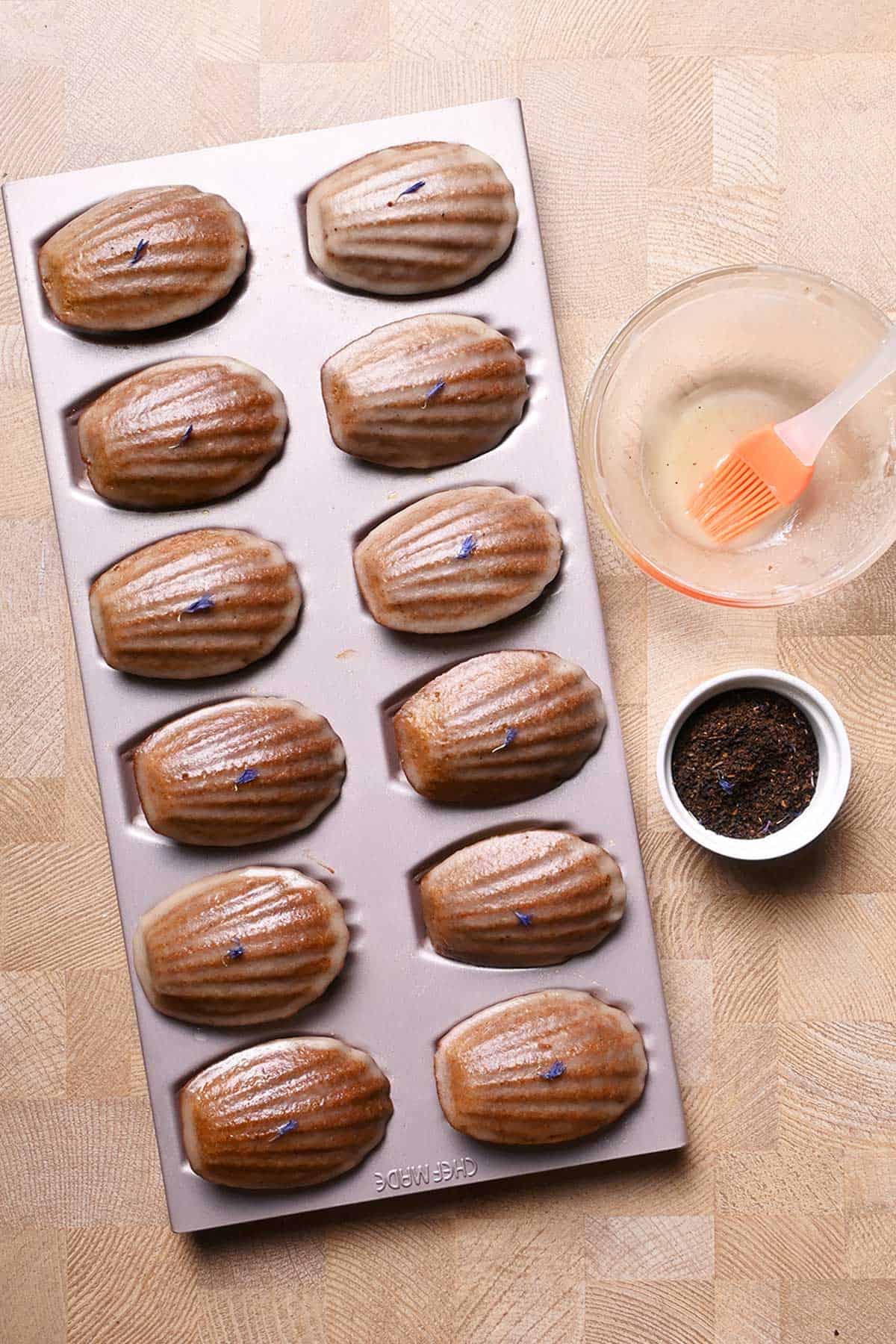
- In a medium bowl, sift the confectioners' sugar. Add earl grey tea. Mix until a thick brown paste forms. You can adjust the consistency by adding more tea/water to make the glaze thinner or confectioners' sugar to make it thicker.
- Brush the shell side of the madeleines with the glaze. Place the madeleines with the shell side up to set the glaze.



You always make the best Madeleine recipes. Thank you so much!